On a peninsula where laundry goes in damp ten months a year, a dryer works harder than almost anything else you own. Anchor services gas and electric units across all seven communities — airflow measured first, parts accused second.

What each complaint usually turns out to be once the panels are off and the meter is out.
| The Complaint | The Usual Culprit | How It Closes |
|---|---|---|
| Tumbles but no heat | Choked exhaust run, element, fuse, or gas igniter | Airflow reading first, then the failed part — measured, not guessed |
| Loads take two cycles | Damp Kitsap lint felted into the duct | Accessible run cleared, moisture sensor cleaned, flow verified |
| Squeal, thump or grind | Drum rollers, idler pulley, tired belt | Hardware set renewed in one visit from van stock |
| Quits partway through | Overheat protection tripping, or a fading motor | The cause repaired — never just the reset button |
| Dead — nothing at all | Door switch, thermal fuse, or the wall outlet | Machine and receptacle both metered before any verdict |
| Burnt smell on warm loads | Restricted exhaust cooking the lint | Vent path restored, thermostats tested, hazard retired |
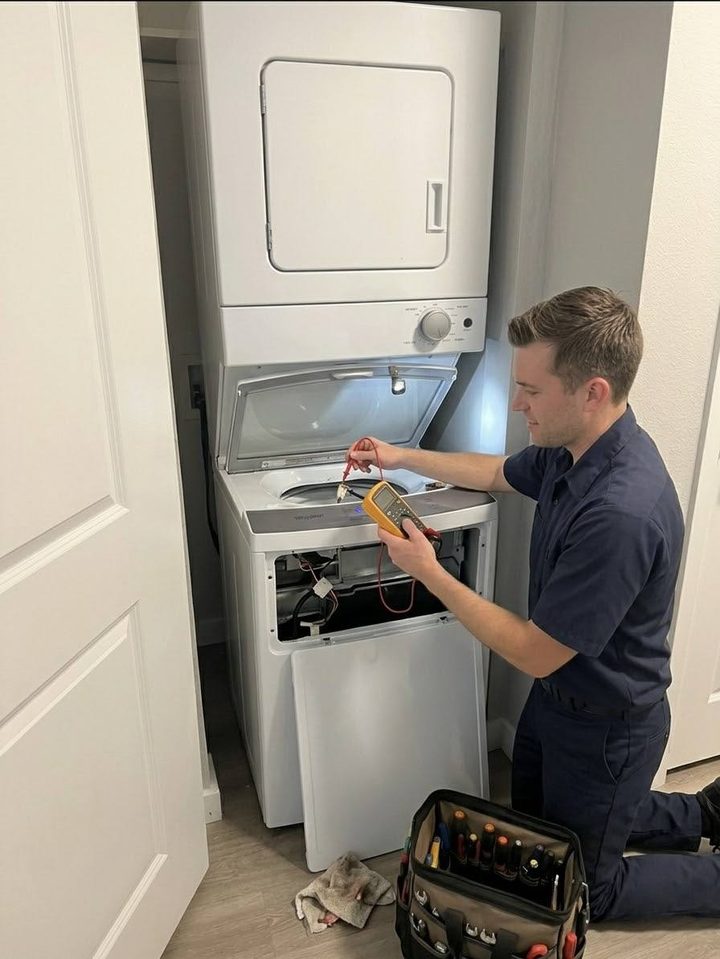
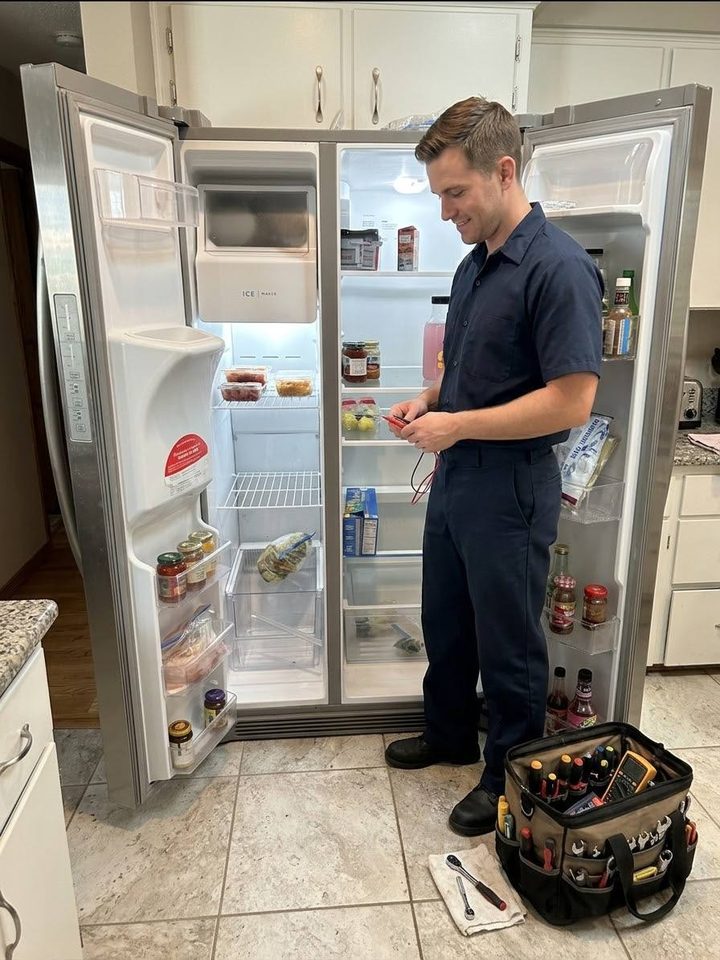
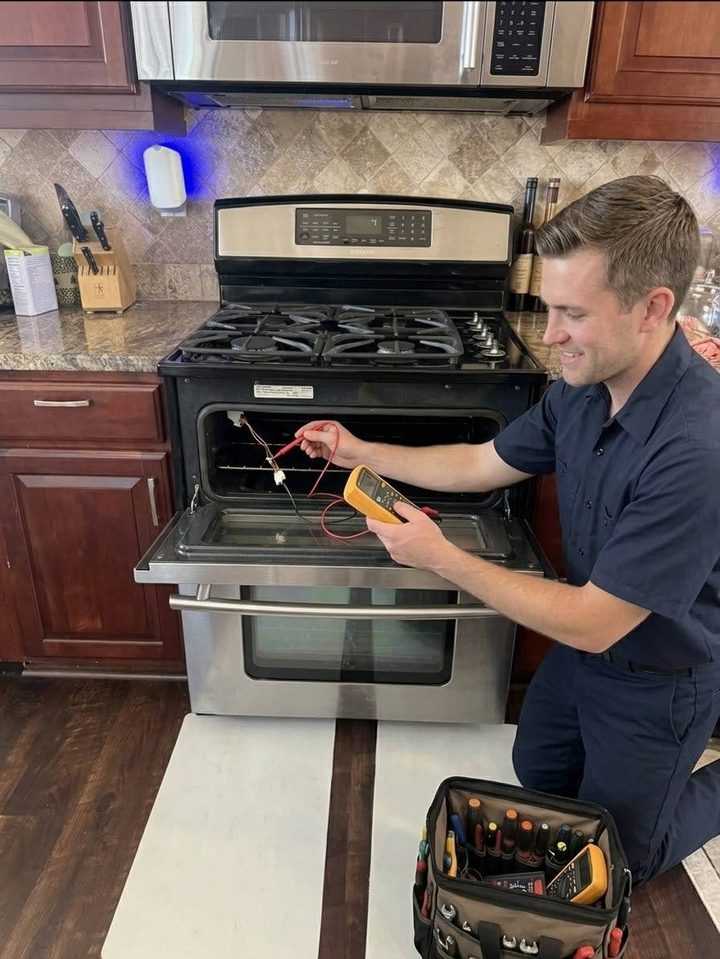
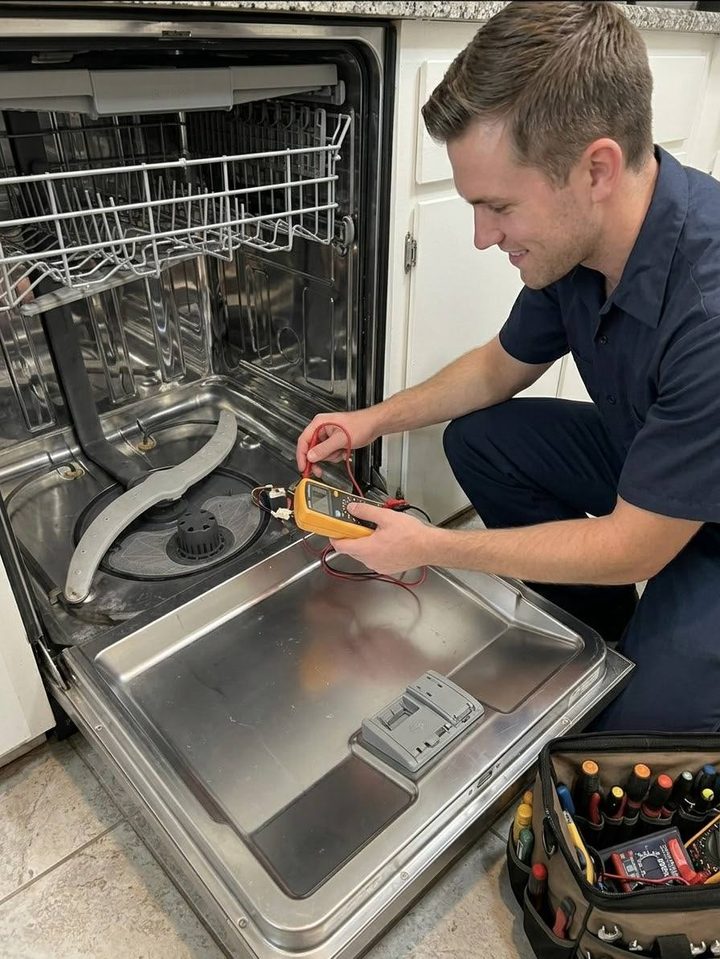
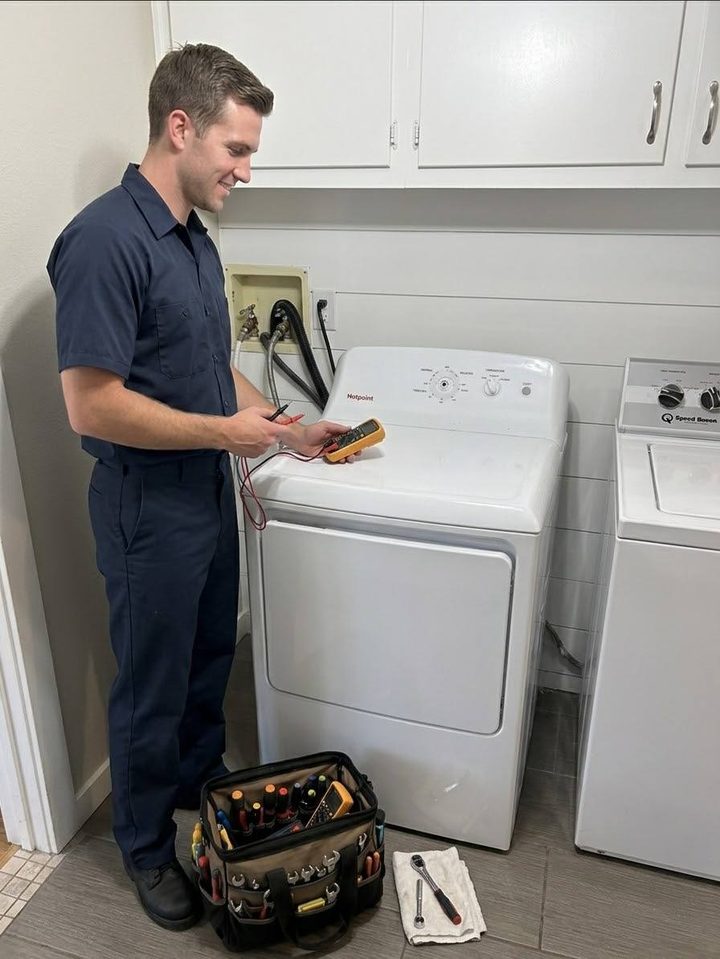
Straight from the rounds — the day's patients, the meter, and the hands doing the fixing.
Ring (360) 717-8997, or give the form ninety seconds — either way the intake starts stocking the van before it leaves Clare Ave.
Panels off, meter out, a full cycle observed where the fault demands it. Nothing gets named until it's measured.
Fault-finding and labor share the published figure; hardware gets quoted separately for your signature — or call it off at the verdict for $94 even.
The machine runs a full cycle under our eyes before the tools pack up — then the written parts-and-workmanship warranty stays behind with you.
Half the no-heat calls on this peninsula end at the exhaust, not the element. The diagnosis names the true culprit before a single part is ordered, and a cleared duct often closes the job at the from-price alone.
📞 Call (360) 717-8997Because Puget Sound laundry carries more water in than the manuals assume, and the extra moisture keeps lint sticky. Sticky lint mats into duct felt years faster than in dry country, throttles the exhaust, and makes a healthy heater look dead. It's why every Anchor dryer visit opens with an airflow reading.
From $221, a figure that already contains the trip, the fault-finding and however long the labor runs. Any component — element, fuse, igniter, roller kit — rides its own quoted line and goes in only after your signature. Prefer to halt at the verdict? $94 squares the whole visit.
Both, every week. Electric dominates peninsula laundry rooms; gas units book at the identical figure and get their burner sequence watched live — glow, valve, flame — with a leak test before the van door shuts.
Purely a matter of choreography. Newer Kitsap builds and apartments stack laundry as a rule — say so at booking and the proper lifting gear plus a second pair of hands make the trip. The figure stays put.
A strangled vent can be — lint burns eagerly, and a blocked exhaust pushes temperatures where they shouldn't go. Few home-fire causes are more preventable, which is why a risky vent gets named to you plainly, in writing, whether or not you book the fix with us.
Call (360) 717-8997 with the symptom — dryer parts for the common platforms ride the van as a rule.
Kitsap is hard duty for a clothes dryer. Marine air keeps indoor humidity generous, loads arrive wetter, cycles run longer, and the lint that ordinary climates shed as dust settles here as a sticky felt inside every duct it touches. The machines themselves fail the usual ways — elements burn open, fuses give out, rollers wear flat — but the peninsula adds its own signature ailment on top: exhaust runs that suffocate quietly for years until a perfectly good heater takes the blame.
The from-price of $221 buys an unhurried look, not a part swap on a hunch. Airflow gets measured at the machine, the vent path gets inspected where it climbs or crosses, both thermostats and the moisture sensor get tested, and the electrical chain gets metered end to end — on Bremerton's older streets that includes the wall outlet, a gifted impersonator of dryer death. Only then does a verdict go on paper, with any needed part priced as its own line for your signature.
A motor and a drum bearing giving out together on a machine deep into its second decade is a retirement letter, not a repair ticket. When the arithmetic stops favoring the fix, you hear it at the machine, pay $94 for the visit and the written verdict, and get a plain recommendation on what to buy for a wet climate — sensor models with accessible screens, nothing exotic.
Open what applies to your house; leave the rest furled.
When the exhaust can't breathe, the safety limit keeps benching a perfectly good heater — reads like 'no heat,' is actually 'no air.' A flow gauge settles the question in two minutes, and a guilty duct means an empty hardware line and a bill that stops at the published figure. No habit aboard the van kills more needless spending.
Across Kitsap, ten-year-old dryers regularly plug into fifty-year-old circuits, and a worn-out 240-volt outlet stages a very persuasive funeral for a living machine. The examination therefore reads the wall alongside the appliance — and where the wiring proves to be the real trouble, the paperwork says exactly that and points you toward a licensed electrician.
Van stock covers most dryer cures on the spot. When a rarer component must travel, the first call wraps with everything priced on paper and the follow-up call installs it — no fresh labor money involved. That two-trip rhythm claims about a third of this trade's jobs, and Anchor's figures were drawn with it already priced in.
Basement laundry is Bremerton's dryer signature — cool damp rooms and long duct climbs that felt shut years early. Clare Ave sits minutes from most of these calls, and a striking share of them close with cleared airflow and an empty parts line.
Across the inlet the caseload splits: older streets send honest element-and-fuse work, the newer corridors send sensor-generation cycles that quit with laundry still damp. Both ride the same $221 figure, and the foot-ferry crowd books morning windows around sailings.
Two-story plats route exhaust through long hidden chases that hoard damp lint invisibly — Silverdale's most common dryer disease costs nothing in parts. The young machines up here also justify a warranty question at intake, answered free on the phone.
Salt stiffens exterior flaps on the view rows while crawl-space ducts on the wooded lanes hoard a decade of lint — one complaint, two cures, and the airflow-first exam sorts them. Outbuilding installs are welcome; mention the driveway fork at booking.
Half the valley dries on electricity and half on propane, so southbound runs carry shelves for each. Long rural feeds sag under load and fake element failure convincingly — the meter rules first, and a power-side verdict leaves as a written referral.
Out on the point, marine moisture does its usual work and salt stiffens the outside vent flap on top — so the inspection begins at the wall cap before anything indoors. Appointments track the ferry timetable, with the quiet stretch between commuter sailings the simplest slot to keep.
Bay humidity keeps Liberty Bay laundry damp and ducts working overtime; airflow reads first on every northern run. Stacked cottage closets downtown are familiar work — flag the setup and the right dolly rides north.
The published figure carries the trip, the fault-finding and however much labor the cure demands — that line never grows. Hardware travels separately: each component quoted at its own price and installed only over your signature. And when the wise course is to stand down, $94 settles the entire visit.
📞 Call (360) 717-8997Dryer calls run daily on both sides of Sinclair Inlet — Bremerton and Silverdale mornings, the southern and eastern communities on their route days.